



Bradykinin B2 Receptor (B2R)
Bradykinin B2 receptor (B2R) mediates common kinin responses, including hypotension, bronchoconstriction, epithelial secretion, vascular permeability, pain, cytokine release, and eicosanoid formation[1]. Mechanistically, bradykinin-induced B2R activation drives vasodilation in human forearm resistance vessels, and icatibant dose-dependently inhibits this B2R-mediated vascular response[2]. In airway inflammation models, B2R blockade with icatibant reduces antigen-induced nasal hyperresponsiveness, eosinophils, eosinophil cationic protein, kinin, and IL-8 in seasonal allergic rhinitis[3]. In hereditary angioedema, bradykinin acts as the key mediator of symptoms, and the selective B2R antagonist icatibant provides clinically significant symptom relief in acute cutaneous or abdominal attacks[4]. Compared with B1 receptor, which is inducible after injury and inflammation, B2R represents the common kinin receptor subtype and remains central to acute bradykinin signaling[1][5]. For experimental applications, icatibant is useful for testing B2R-dependent vascular leakage and inflammatory responses, although micromolar icatibant can inhibit aminopeptidase N and alter B1 or angiotensin receptor signaling[6].
References:
- [1]. Steranka LR, et al. Antagonists of B2 bradykinin receptors. FASEB J. 1989 Jul;3(9):2019-25. [Content Brief]
- [2]. Cockcroft JR, et al. Inhibition of bradykinin-induced vasodilation in human forearm vasculature by icatibant, a potent B2-receptor antagonist. Br J Clin Pharmacol. 1994 Oct;38(4):317-21. [Content Brief]
- [3]. Turner P, et al. Role of kinins in seasonal allergic rhinitis: icatibant, a bradykinin B2 receptor antagonist, abolishes the hyperresponsiveness and nasal eosinophilia induced by antigen. J Allergy Clin Immunol. 2001 Jan;107(1):105-13. [Content Brief]
- [4]. Cicardi M, et al. Icatibant, a new bradykinin-receptor antagonist, in hereditary angioedema. N Engl J Med. 2010 Aug 5;363(6):532-41. [Content Brief]
- [5]. Schanstra JP, et al. The B1-agonist [des-Arg10]-kallidin activates transcription factor NF-kappaB and induces homologous upregulation of the bradykinin B1-receptor in cultured human lung fibroblasts. J Clin Invest. 1998 May 15;101(10):2080-91. [Content Brief]
- [6]. Bawolak MT, et al. The bradykinin B2 receptor antagonist icatibant (Hoe 140) blocks aminopeptidase N at micromolar concentrations: off-target alterations of signaling mediated by the bradykinin B1 and angiotensin receptors. Eur J Pharmacol. 2006 Dec 3;551(1-3):108-11. [Content Brief]
-
Bradykinin B2 Receptor (B2R) Related Products (16)
Related Products (16)

- 1
-
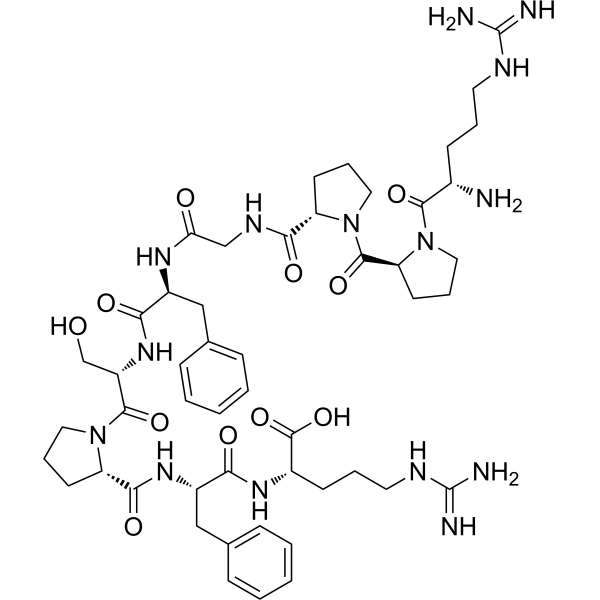
Icatibant
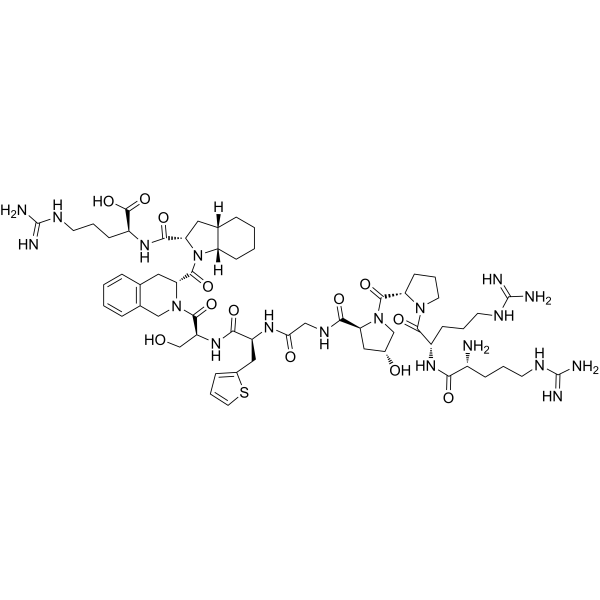 0 ImagesSynonyms: HOE 140Icatibant (HOE-140) is a potent and specific peptide antagonist of bradykinin B2 receptor with IC50 and Ki of 1.07 nM and 0.798 nM respectively.
-
Icatibant acetate
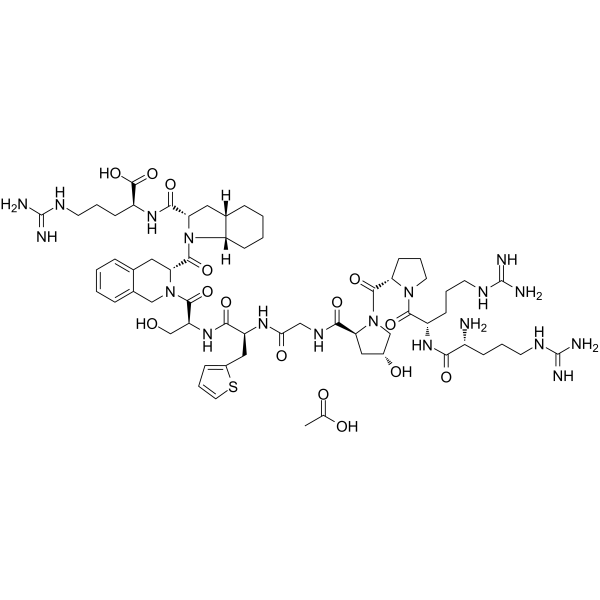 0 ImagesSynonyms: HOE 140 acetateIcatibant acetate (HOE-140 acetate) is a potent and specific peptide antagonist of bradykinin B2 receptor with an IC50 and Ki of 1.07 nM and 0.798 nM respectively.
-
Lobradimil
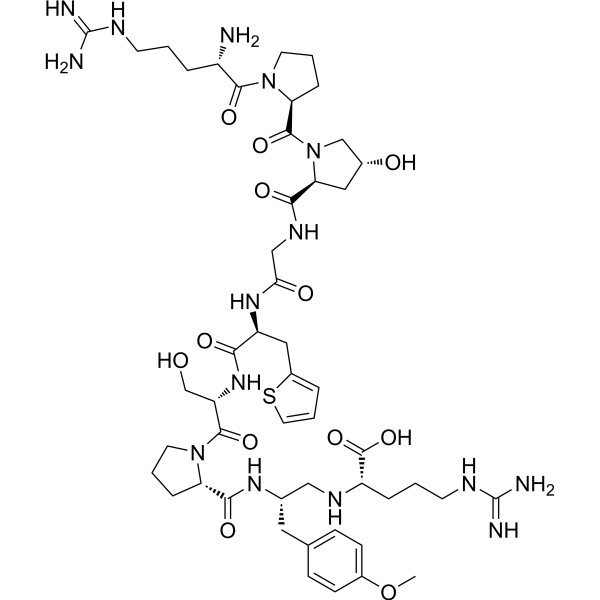 0 ImagesSynonyms: RMP 7Lobradimil (RMP 7), a synthetic bradykinin analog, is a potent and selective bradykinin B2 receptor agonist (Ki: 0.54 nM). Lobradimil increases the permeability of the BBB. Lobradimil can be used in the research of brain tumors.
-
Anatibant hydrochloride
 0 ImagesSynonyms: LF 16-0687 hydrochloride; XY-2405 hydrochlorideAnatibant hydrochloride (LF 16-0687 hydrochloride; XY-2405 hydrochloride) is a selective non-peptide bradykinin B2 receptor antagonist. Anatibant hydrochloride binds to the human, rat and guinea-pig recombinant B2 receptor with Ki values of 0.67 nM, 1.74 nM and 1.37 nM, respectively. Anatibant hydrochloride crosses the blood-brain barrier (BBB). Anatibant hydrochloride can be used in research on brain damage diseases.

-
Anatibant
 0 ImagesCat. No.: HY-121156CAS No.: 209733-45-9Synonyms: LF 16-0687; XY-2405Anatibant (LF 16-0687; XY-2405) is a selective non-peptide bradykinin B2 receptor antagonist. Anatibant binds to the human, rat and guinea-pig recombinant B2 receptor with Ki values of 0.67 nM, 1.74 nM and 1.37 nM, respectively. Anatibant crosses the blood-brain barrier (BBB). Anatibant can be used in research on brain damage diseases.
-
WIN 64338 hydrochloride
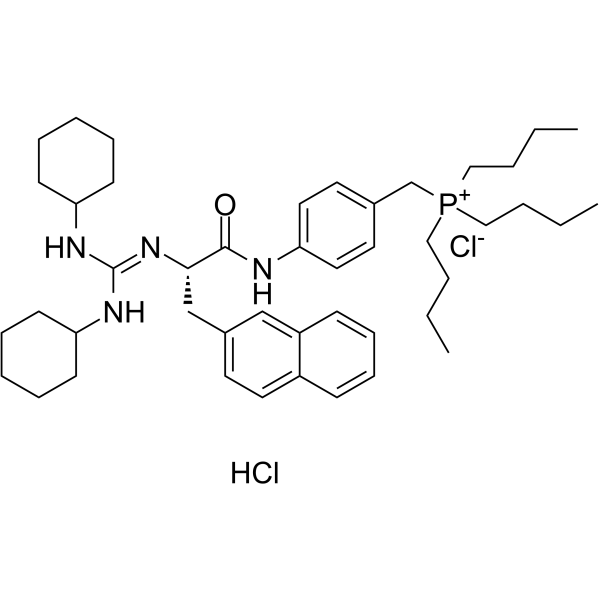 0 ImagesWIN 64338 hydrochloride is a potent, selective, nonpeptide competitive antagonist of bradykinin B2 receptor. WIN 64338 hydrochloride inhibits [3H]-Bradykinin binding to the bradykinin B2 receptor on human IMR-90 cells with a Ki of 64 nM. WIN 64338 hydrochloride also can inhibits [3H]Quinuclidinyl benzilate binding to the rat brain muscarinic receptor (Ki=350 nM).
-
Fasitibant free base
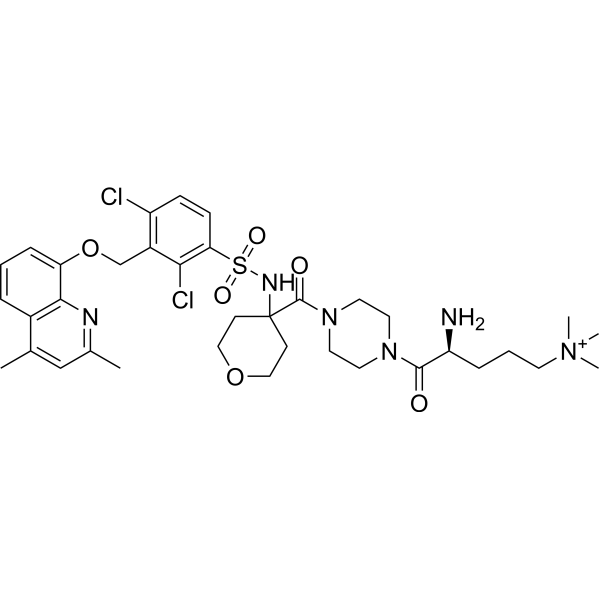 0 ImagesCat. No.: HY-106277CAS No.: 869939-83-3Fasitibant (free base) is a potent, selective, high affinity, and long-lasting nonpeptide bradykinin B2 (BK2) receptor antagonist. Fasitibant (free base) has proinflammatory effects and can be used for the research of osteoarthritis and rheumatoid arthritis.
-
B 9430
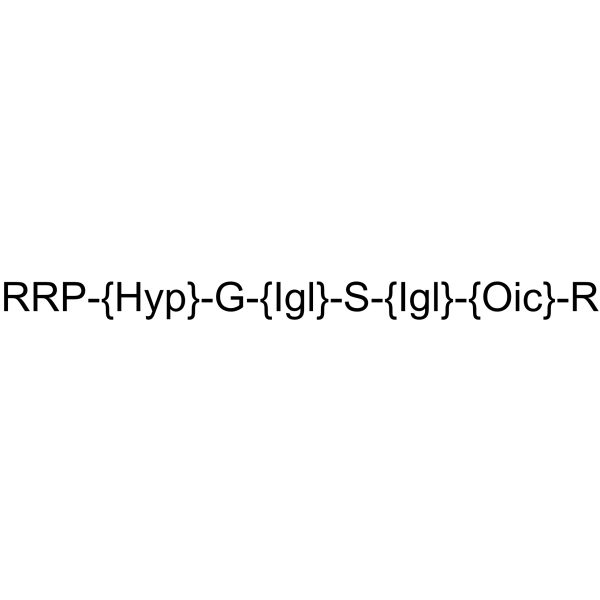 0 ImagesCat. No.: HY-P3232CAS No.: 180981-09-3B 9430 is a potent bradykinin B1/B2 receptor antagonist.
-
Fasitibant chloride hydrochloride
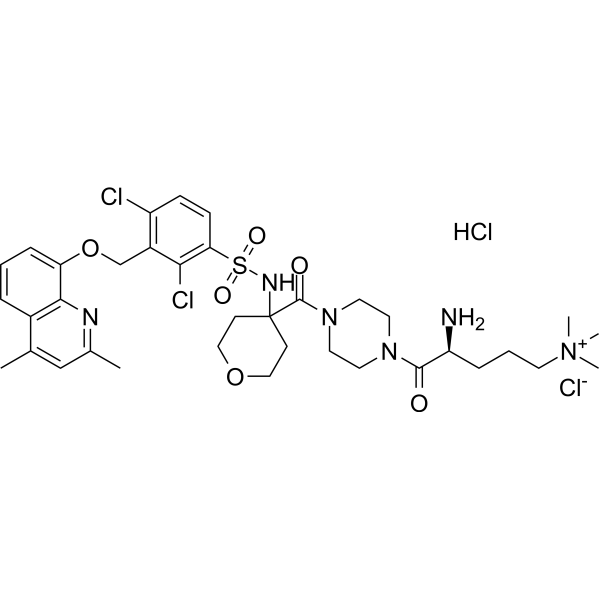 0 ImagesCat. No.: HY-106277ACAS No.: 869880-33-1Synonyms: MEN16132Fasitibant chloride hydrochloride (MEN16132) is a potent, selective, high affinity, and long-lasting nonpeptide bradykinin B2 (BK2) receptor antagonist. Fasitibant chloride hydrochloride has proinflammatory effects and can be used for the research of osteoarthritis and rheumatoid arthritis.
-
FR167344 free base
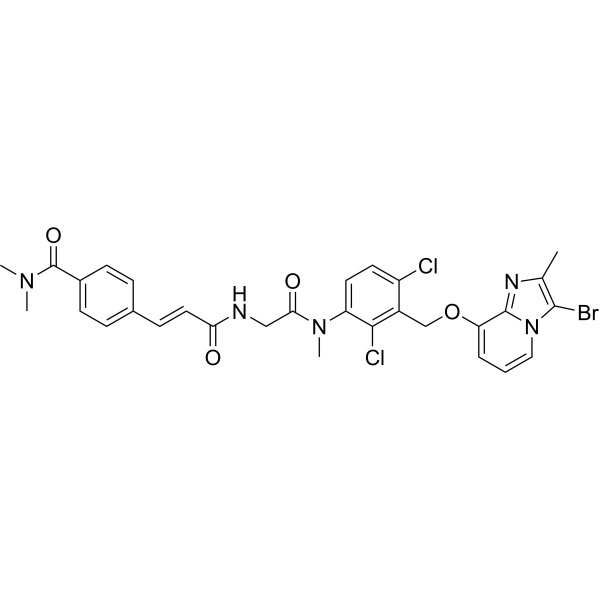 0 ImagesCat. No.: HY-100301CAS No.: 215258-13-2FR167344 free base is an orally active, nonpeptide bradykinin receptor B2 antagonist. FR167344 free base shows a high affinity binding to the B2 receptor with an IC50 value of 65 nM and no binding affinity for the B1 receptor.
-
WIN 64338
 0 ImagesCat. No.: HY-101368CAS No.: 151039-63-3WIN 64338 is a non-peptide bradykinin B2 receptor antagonist. WIN 64338 can inhibit bradykinin-evoked trigeminal nerve stimulation.
-
FR-190997
 0 ImagesCat. No.: HY-123376CAS No.: 193344-25-1FR-190997 is a non-peptide Bradykinin B2 receptor selective agonist, Ki value is 9.8 nM. FR-190997 is also an effective antihypertensive agent.
-
FR191413
 0 ImagesCat. No.: HY-118945CAS No.: 194928-55-7FR191413 is a selective bradykinin B2 receptor agonist that stimulates prostaglandin E2 production in WI-38 cells and activates BK B2 receptor-mediated pathways such as vasodilation and organ protection. FR191413 competitively binds to [3H]-BK in guinea pig ileum (GPI) membranes and CHO cells transfected with the human BK B2 receptor, with IC50 values of 20.0 nM and 2.60 nM, respectively. FR191413 can be used in research related to cardiovascular diseases and diabetes, including hypertension, myocardial hypertrophy, myocardial infarction, arrhythmias, and diabetic nephropathy.
-
Breceptin
 0 ImagesCat. No.: HY-P1650CAS No.: 215713-39-6Synonyms: B 9870Breceptin (B 9870) is an antagonist of the bradykinin B1/B2 receptor (B1/B2R). Breceptin exhibits an irreversible antagonist effect on B2R, inhibiting the vasodilation induced by Bradykinin (HY-P0206) in the rabbit carotid vein contraction experiment. B-9870 shows partial agonist properties in HEK 293 cells with high expression of B2R, and can activate ERK1/2 phosphorylation, calcium ion mobilization, arachidonic acid release, and receptor internalization. Breceptin can be used in research to inhibit breast cancer and non-small cell lung cancer.
- 1



